
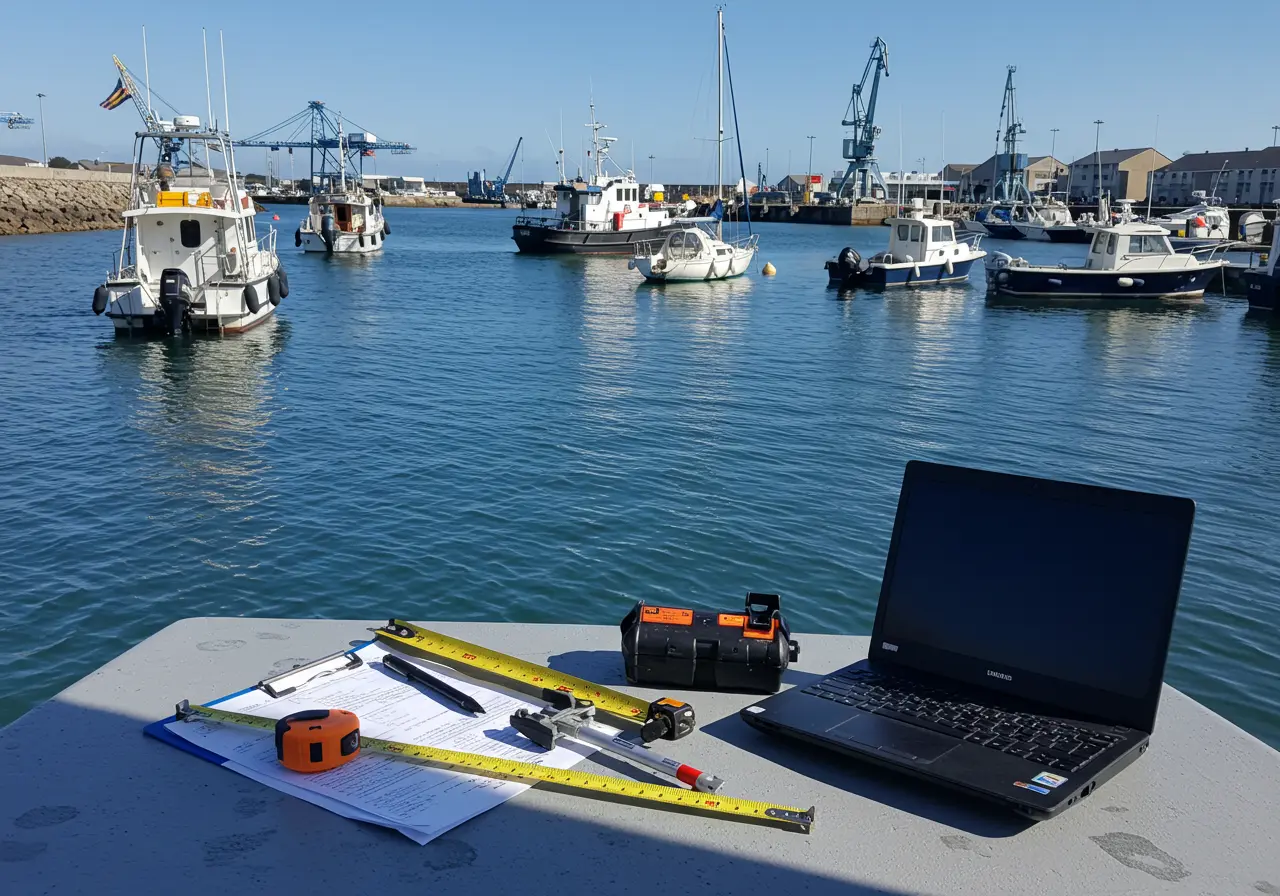
What is done in a marine survey? A marine survey is a structured inspection of a boat’s condition, systems, safety equipment and value. The surveyor checks the hull, deck, through-hulls, steering, electrical, fuel, plumbing, rigging, engine access, safety gear and other visible or accessible areas, then documents deficiencies, photos, valuation notes and recommendations in a written report.
For Toronto boat buyers and owners, the exact scope depends on whether the survey is for a pre-purchase survey, an insurance survey, a condition and valuation report, or a sea trial. The goal is practical information a buyer, owner, insurer or lender can use before making a purchase, renewal, financing or coverage decision.
What is a Marine Surveyor?
A Marine Surveyor is an expert dedicated to inspecting and evaluating boats. A surveyor works with boat owners, buyers, sellers, insurers, and financial institutions to ensure that vessels meet industry standards and regulations. They evaluate the structural integrity of a boat’s hull and deck and examine mechanical, electrical, plumbing, safety systems, rigging, fittings, and navigation equipment. Once the inspection is done, a surveyor provides a detailed report of the findings, including photographs and recommendations, ensuring compliance with standards like ABYC and ISO. This report can be used to decide whether to buy a boat or not (and can be used to negotiate price). It can be used to figure out how much a boat is worth. It can also be used to get or renew insurance coverage.What a Marine Surveyor Checks
In most recreational boat surveys, the inspection includes:
- Hull, deck, keel, transom, fittings, through-hulls and signs of damage or moisture.
- Electrical, fuel, steering, plumbing, bilge, safety and navigation systems where visible and accessible.
- Engine and propulsion observations, with a mechanic recommended for detailed engine diagnostics.
- Photos, deficiency notes, valuation context and practical recommendations in the final report.
Pre-Purchase Survey
You have done a boat pre-purchase survey on a boat before you seal the deal. For example, a home sale can be conditional on an inspection, and a boat sale can be conditional on a pre-purchase survey. This inspection is comprehensive.Appraisal Survey
Then there is an Appraisal Survey, which you may decide to get if you are selling your boat, refinancing or need a value for legal reasons. This survey is thorough without getting into the minutiae of what is involved in each repair.Insurance Survey
Finally, an insurance company will require a periodic survey to ensure the vessel’s safety. Boat Insurance surveys are generally the least thorough and follow a format defined by insurance companies, focusing on structural integrity and safety equipment.What Happens During the Inspection?
During the inspection, the boat is worked through by section. A surveyor may look at the hull, deck, rigging, cockpit, cabins, engine space, bilge, electrical panels, safety gear and accessible systems. On the hull, for example, the surveyor may look for previous damage, repair quality, unusual moisture readings, propeller and shaft condition, rudder condition, fittings and signs of impact or deterioration.
This is not just a checklist. Saying the hull is “in good shape” is not specific enough. The report should explain what was observed, what deficiencies were found, whether those deficiencies matter for safety, value or insurance, and what kind of follow-up may be needed.
After the inspection, the information is compiled into a professional written report for the buyer, owner, insurer or lender.
What Are Marine Surveyors Not Responsible For?
It’s also important to understand what a surveyor won’t do—because there are quite a few things. A surveyor won’t usually start an engine or drive the boat. This is up to the boat owner. The owner may start the engine at the dock as part of the survey. Or, it may be done as part of a Sea Trial, which will require the owner to take the boat off the dock and drive it with the surveyor present. Also, a surveyor can’t be expected to be an expert in marine engines. Therefore, although the engine may be started (with the owner present), the surveyor will not give it a clean bill of health. The recommendation will be to get a licensed mechanic to take a detailed look at the engine and give you their verdict. The same applies to electronics. The number of manufacturers and models of marine electronics is vast. Each unit—especially the new technology—can be configured in many different ways. Therefore, the most that a surveyor will do is to let you know if they “power up” or not. More information on how well they function must be from the owner or an electronics expert you trust. It is also essential for a client to understand that a surveyor must be very careful about conflicts of interest. For example, a surveyor may discover that the refrigerator or air conditioner is malfunctioning. According to the code of ethics of any surveying organization (such as SAMS or NAMS), it is prohibited for a surveyor to say, “It needs to be fixed….and I can fix it.” It is also prohibited for the surveyor to recommend a third party. This means that a surveyor may deliver all kinds of news that will not have actual teeth until you’ve consulted with another expert.What Are the Different Types of Marine Surveyors and Their Roles?
Marine surveyors specialize in various areas depending on the type of vessels and services they provide.Yacht and Small Craft Surveyors
Yacht and Small Craft Surveyors focus on inspecting recreational boats, yachts, and smaller vessels, often conducting pre-purchase surveys, insurance assessments, or damage evaluations.Commercial Marine Surveyors
Commercial and Marine Surveyors work with larger vessels, such as cargo ships, tankers, and passenger ships, ensuring compliance with safety regulations, classification standards, and operational efficiency.
Cargo Surveyors
Cargo Surveyors specialize in assessing the condition of cargo being transported by sea. They ensure that the cargo is loaded, secured, and delivered safely while documenting any damage or loss.Classification Society Surveyors
Classification Society Surveyors work on behalf of classification organizations to certify that vessels meet specific design, construction, and maintenance standards.Government Surveyors
Government Surveyors inspect vessels to ensure compliance with national and international regulations. They often work on issues related to port state control, safety, and environmental protection.Insurance Surveyors
Insurers engage insurance surveyors to inspect vessel conditions, investigate claims, and determine the validity and scope of damages.Why Are Marine Surveyors Important?
You wouldn’t buy a house without having it inspected. And most people know much more about the systems in houses than about systems on boats. But this doesn’t seem to stop people from getting swept up in the excitement and the dream and leap into being a boat owner. However, to experienced boaters, B.O.A.T. is an acronym for “Bring Out Another Thousand.” That boat you’re jumping into may have a wiring job done by a home handyman using non-marine-grade parts. It may have a hull that is soaking up moisture. It may have a mast that is on the verge of falling down. You will inevitably have to spend some money owning a boat—just like a car or a home. But you certainly don’t want to spend more than you have to or spend precious summer hours fixing things rather than cruising.How to Choose the Right Marine Surveyor?
In Canada, there are no legal requirements that a surveyor have any qualifications whatsoever. If you wanted to hang a shingle tomorrow and start doing surveys the next day, you could do so. However, doing this is not only irresponsible and dishonest but could be unsafe and potentially land you in many legal trouble. Here is what you should look for:- Affiliation with a recognized marine surveying organization. The most popular in North America for personal yachts is the Society of Accredited Marine Surveyors (SAMS). However, there is also the National Association of Marine Surveyors.
- Training from a recognized school. There are many of these in North America. However, (in this surveyor’s opinion), the most respected are the International Institute of Marine Surveyors and Lloyds School of Marine Surveying.
- Boating experience! As the expression goes, “It’s about time in the boat.” A surveyor should have spent a lifetime on the water in various boats.
- Insurance. A marine surveyor must have business liability insurance specific to marine surveying. Most marinas and boatyards won’t let a surveyor pass the gate without this.
What are The Costs of Hiring a Marine Surveyor?
The costs of hiring a surveyor depend entirely on the survey type and whatever add-on services you choose. Kiki Marine offers a range of marine surveying services with pricing based on vessel size and specific service requirements. For Pre-Purchase Surveys, the cost starts at $550 for vessels under 25 feet, increasing incrementally with vessel length: $23 per foot for 26–30 feet, $24 per foot for 31–40 feet, $25 per foot for 41–50 feet, and custom quotes for vessels over 50 feet. Appraisal Surveys begin at $500 for vessels under 25 feet, with rates of $21 per foot for 26–30 feet, $22 per foot for 31–40 feet, $23 per foot for 41–50 feet, and custom quotes for larger vessels. Insurance Surveys start at $550, with detailed pricing available upon request. Optional Sea Trials are available at $100 per hour, with a minimum duration of two hours. Travel fees are calculated at $1.00 per kilometre, plus any necessary parking fees, with an additional $75 fee for services conducted on Toronto Island.Conclusion
Whether you’re buying, selling, insuring, or looking for the value of your boat, you will need a marine surveyor. Marine surveyors play a critical role in ensuring boats’ safety, value, and integrity. They provide expert evaluations that can prevent costly surprises, guide informed decisions, and ensure compliance with industry standards. From inspecting a boat’s structure and systems to delivering comprehensive reports and recommendations, their work is invaluable in the world of boating. Choosing a qualified and experienced marine surveyor is essential to safeguarding your investment and enjoying peace of mind on the water.FAQs
How Do I Know If A Surveyor Is Qualified? In Canada, there are no legal requirements for a marine surveyor to have any formal qualifications. In fact, anyone could theoretically set up a shop and start conducting surveys without prior experience or training. However, doing so would not only be irresponsible and dishonest but could also pose serious safety risks and lead to significant legal consequences. To ensure you’re working with a qualified professional, look for a surveyor affiliated with a recognized marine surveying organization, such as the Society of Accredited Marine Surveyors (SAMS) or the National Association of Marine Surveyors. Proper training is also crucial, and some of the most respected institutions offering marine surveying education include the International Institute of Marine Surveyors and Lloyds School of Marine Surveying. Beyond credentials, extensive boating experience is indispensable; as the saying goes, “It’s about time in the boat.” A good surveyor will have spent years on the water and be familiar with various types of vessels. Lastly, ensure the surveyor has business liability insurance specific to marine surveying, as most marinas and boatyards require it before granting access to their facilities. What Is The Position Of A Surveyor? The position of a surveyor is a professional role that involves inspecting, evaluating, and documenting the condition, value, and safety of vessels. Surveyors are often hired by boat owners, buyers, sellers, insurers, and financial institutions to assess whether a vessel meets industry standards, regulatory requirements, and the specific needs of the client. They play a critical role in identifying potential issues, recommending repairs, and helping buyers and owners make informed decisions. What Are The Levels Of The Surveyor? The Society of Accredited Marine Surveyors (SAMS) offers two surveyor classifications: Accredited Marine Surveyor (AMS) and Surveyor Associate (SA). To attain AMS status, candidates must have at least five years of marine surveying experience within the past decade, complete an application with a resume, submit survey reports for review, pass a written examination in their field of expertise, and commit to ongoing continuing education. Surveyor Associates are practicing marine surveyors who have not yet met the requirements for AMS status; they must agree to adhere to SAMS’s By-Laws and Code of Ethics, submit an application with a resume and survey reports, and participate in continuing education. Additionally, AMS members can earn specialization designations in areas such as Yachts and Small Craft (Y&SC), Hull and Machinery (H&M), Cargo (C), Engines—Gasoline or Diesel (E), Fishing Vessels (FV), and Tug & Barge (T&B), each requiring specific experience and successful completion of relevant examinations.Kiki Marine provides pre-purchase surveys, insurance surveys, and related marine survey services for Toronto and Lake Ontario marinas from Oakville to Whitby.
Need a marine survey in Toronto or on Lake Ontario?
Kiki Marine provides pre-purchase and insurance boat surveys across Toronto and the GTA, including Oakville, Port Credit, Etobicoke, Toronto Harbour, Scarborough, Pickering, Ajax, and Whitby.
If you are looking for survey help in the city, the Toronto Marine Survey page explains Kiki Marine’s pre-purchase, insurance and Toronto yacht survey services for local buyers, owners and insurers.
Need a marine survey in Toronto or on Lake Ontario? Kiki Marine provides independent Toronto marine survey reports, plus pre-purchase survey and insurance survey reports.