
SAILBOAT & POWERBOAT EXAMPLES
See the detail behind a marine survey.
A useful survey report connects what was inspected with what was found, what needs attention and what remains unverified. Explore three completed Kiki Marine reports to see the photographs, findings, recommendations and valuation sections clients receive.
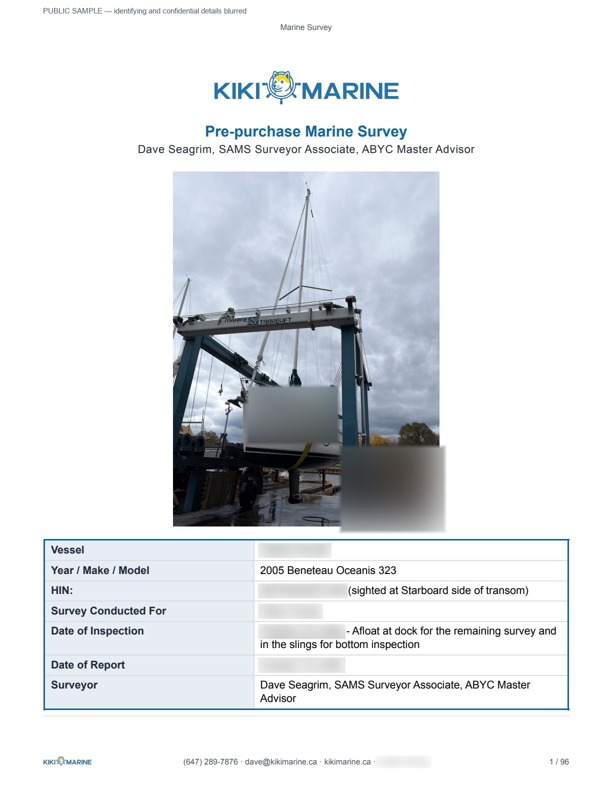
Pre-purchase sailboat survey
Accessible hull, deck, rigging and systems, with photographs, repair priorities and recorded limitations. This example includes inspection afloat, an underwater hull inspection in slings and a limited trial run.
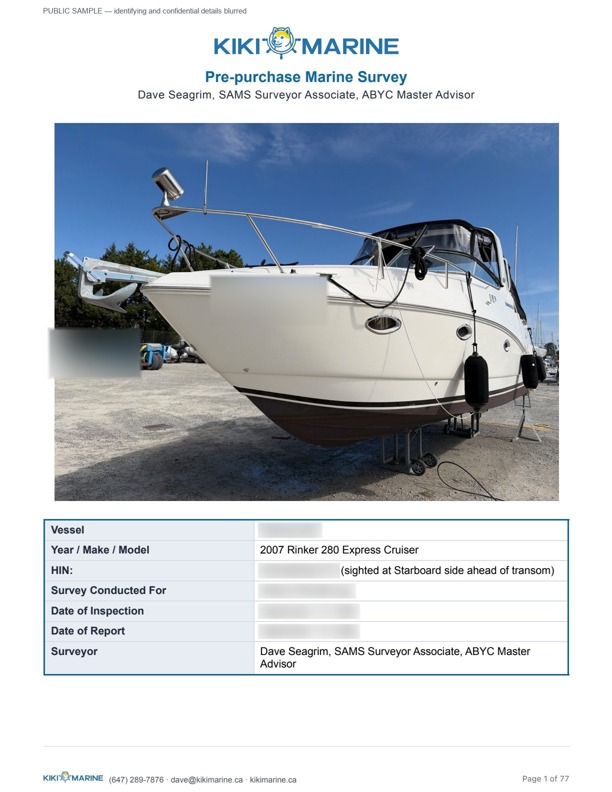
Pre-purchase powerboat survey
Hull, outdrive, accessible machinery, electrical items, installed systems and safety equipment. This boat was inspected ashore; the report identifies machinery and underway checks still needed before purchase.
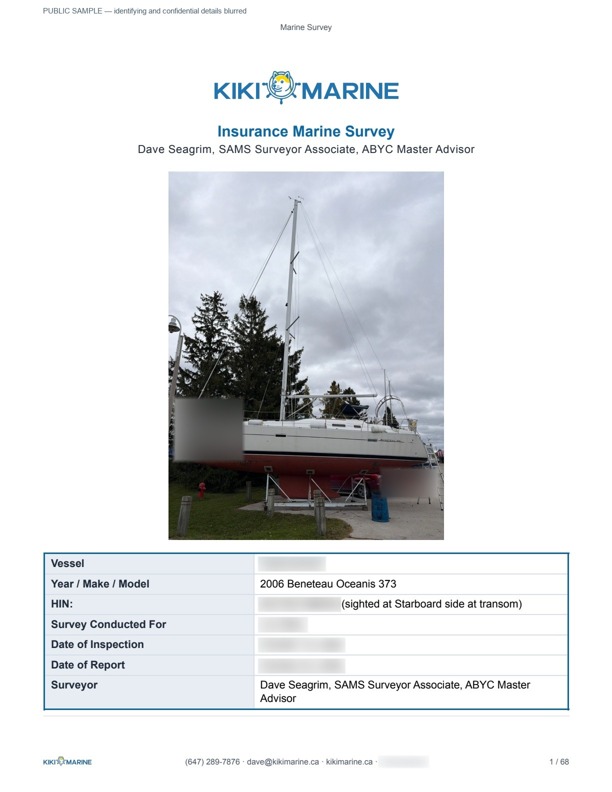
Insurance sailboat survey
An ashore condition and valuation survey with documented observations, safety findings and recommendations. It also records access, power and water limitations, and equipment that could not be verified.
What the survey process looks like
The steps below are drawn from these reports. The agreed scope, boat type, access and inspection conditions determine which checks can be completed.
- Agree on the purpose and inspection arrangements. Establish whether the report is for a purchase or insurance, discuss the insurer’s requirements where applicable, and plan access, haul-out, power, water and any limited trial run.
- Record the vessel and its equipment. Document the boat’s identity, principal specifications, propulsion and installed equipment. Distinguish observed information from published specifications and record identification that cannot be verified.
- Examine the accessible hull and running gear. Inspect visible hull surfaces, keel or outdrive, rudder, propeller, through-hull fittings and related components as applicable. Record percussion and relative impedance readings where performed, with their interpretation and limitations.
- Inspect the deck, structure and interior. Assess accessible fittings, hatches, windows, structural connections and interior spaces. For sailboats, document accessible spars and rigging and identify areas that require the mast to be unstepped for further inspection.
- Assess accessible machinery and installed systems. Record observations of propulsion, fuel, electrical, freshwater, waste and other fitted systems. State which items were function-tested, powered up only, visually inspected or left unverified.
- Review safety equipment and safety findings. Document the equipment observed and the checks actually completed. Identify missing, deficient or unverified items and the required follow-up, keeping those distinctions clear.
- Record operational checks when included. A limited trial run can document starting, controls, instruments, steering and operation under the conditions available. The sailboat pre-purchase example includes these checks; the other two samples explain the limits of an ashore inspection. Specialist machinery work may also be recommended.
- Turn observations into a clear written report. Provide an executive summary, photographs, detailed findings and practical recommendations. Separate urgent concerns, other repairs and inspection limitations. Where valuation is included, explain the evidence and basis of the opinion.
- Use the report to plan the next decision. For a purchase, identify repairs, further investigations and matters to discuss before closing. For insurance, provide the report for the insurer’s review and address its requirements. Dave is available to discuss the findings and recommended next steps.
Choose the survey that fits your purpose
A pre-purchase survey helps you assess a boat before committing to buy. An insurance condition and valuation survey documents its condition and value for your insurer’s review. Scope is agreed for your boat and purpose; report length alone is not a measure of inspection coverage.
These are completed reports from particular inspections. Their observations and limitations reflect those boats and the conditions available at the time.
Discuss your boat with Dave
Send the make, model, length, location and whether you need a pre-purchase or insurance survey. Include your purchase deadline or insurer’s requirements so we can discuss scope, timing and a quote.
Serving Toronto and Lake Ontario marinas from Oakville to Whitby, with additional coverage in Niagara, Georgian Bay, Lake Simcoe and Muskoka.